The Same Music: The Bristol Sessions, Hank Williams, and the Lie That Split Blues from Country
Download MP3In the summer of 1927, a talent scout named Ralph Peer set up a temporary recording studio on the third floor of a hat company in Bristol, Tennessee, and built the two shelves — race records and hillbilly — that still separate blues from country a century later. The split had nothing to do with the music. It had everything to do with the market.
This episode takes the wall down.
The Carter Family's uncredited Black song collector, Lesley Riddle, who taught Maybelle her famous guitar style. Jimmie Rodgers, the Father of Country Music, audibly singing a twelve-bar blues — and inspiring Howlin' Wolf, who couldn't yodel so he howled instead. DeFord Bailey, the Grand Ole Opry's first star, making a locomotive out of a harmonica. Robert Johnson compressing every tradition in the South into twenty-nine songs and a dead man at twenty-seven. Duane Allman tracing the shared root of blues and mountain music on a single slide. Hank Williams, whose primary musical education came from a Black street musician named Rufus "Tee-Tot" Payne. Bill Monroe, who learned his sound from a Black fiddler named Arnold Schultz.
And a recording made in a room in Hollywood in July 1930: Jimmie Rodgers singing with Louis Armstrong on trumpet and Lil Hardin Armstrong on piano. It was filed under hillbilly. Armstrong's name did not appear on the label.
The shelves come down when you listen.
Music in this episode
"Guitar Rag" — Sylvester Weaver (OKeh, 1923). Public domain. Series theme.
"Crazy Blues" — Mamie Smith and Her Jazz Hounds (OKeh, 1920). Public domain.
"The Little Old Log Cabin in the Lane" — Fiddlin' John Carson (OKeh, 1923). Public domain.
"Single Girl, Married Girl" — The Carter Family (Victor, recorded at Bristol, August 1927)
"Blue Yodel (T for Texas)" — Jimmie Rodgers (Victor, 1927)
"Pan American Blues" — DeFord Bailey (Brunswick 146, recorded April 18, 1927)
"Come On In My Kitchen" — Robert Johnson (Vocalion, recorded November 23, 1936)
"Come On In My Kitchen" — The Allman Brothers Band, from Shades of Two Worlds (Epic, ℗ 1991)
"I'm So Lonesome I Could Cry" — Hank Williams (MGM, 1949)
"Blue Yodel No. 9 (Standin' on the Corner)" — Jimmie Rodgers with Louis Armstrong and Lil Hardin Armstrong (Victor, recorded Hollywood, July 1930)
"Crazy Blues" — Mamie Smith and Her Jazz Hounds (OKeh, 1920). Public domain.
"The Little Old Log Cabin in the Lane" — Fiddlin' John Carson (OKeh, 1923). Public domain.
"Single Girl, Married Girl" — The Carter Family (Victor, recorded at Bristol, August 1927)
"Blue Yodel (T for Texas)" — Jimmie Rodgers (Victor, 1927)
"Pan American Blues" — DeFord Bailey (Brunswick 146, recorded April 18, 1927)
"Come On In My Kitchen" — Robert Johnson (Vocalion, recorded November 23, 1936)
"Come On In My Kitchen" — The Allman Brothers Band, from Shades of Two Worlds (Epic, ℗ 1991)
"I'm So Lonesome I Could Cry" — Hank Williams (MGM, 1949)
"Blue Yodel No. 9 (Standin' on the Corner)" — Jimmie Rodgers with Louis Armstrong and Lil Hardin Armstrong (Victor, recorded Hollywood, July 1930)
All excerpts are used as direct commentary on the specific recordings discussed.
Episode artwork
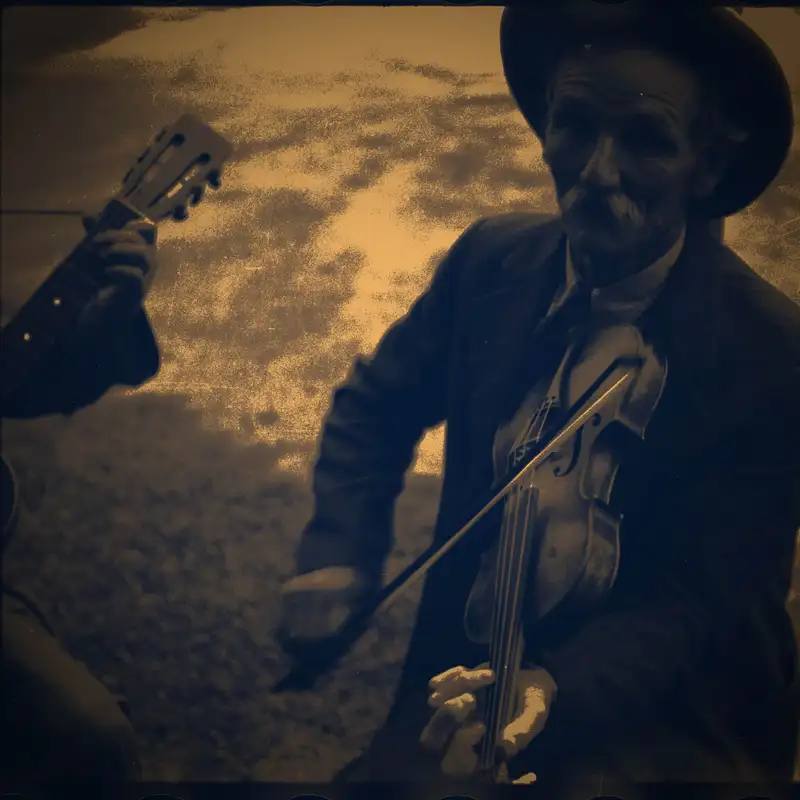
Ben Shahn, "Fiddlin' Bill Hensley, mountain fiddler, Asheville, North Carolina," 1937. Farm Security Administration / Office of War Information Collection, Library of Congress. Digital ID fsa.8a17160.
The print that circulated was cropped to show only the fiddler. The Library's own catalogue note records it: "File print cropped and shows only Fiddlin' Bill." The uncropped negative shows a second musician beside him, playing guitar.
Groundwater draws from Race Records: The Lie That Split American Music — and the Blues That Ran Underneath by Thomas Stubbs.
Next episode: a Friday night in Cleveland, 1952. A hockey arena built for ten thousand and a crowd of twenty thousand banging on the doors. The Moondog.
- (00:00) - Cold Open: Two Discoveries, Three Years Apart
- (02:16) - Introduction
- (02:42) - Act One: The Hat Company
- (08:30) - Act Two: The Same Five Notes
- (12:35) - Act Three: The Man at the Crossroads
- (15:55) - Act Four: The Cover That Showed Its Work
- (18:36) - Act Five: The Hank Williams Problem
- (22:30) - Act Six: The Shelves Come Down
- (26:22) - Outro