We Both Speak African: Dizzy Gillespie, Miles Davis, and How Jazz Crossed the Atlantic
Download MP3Dizzy Gillespie meets Chano Pozo, Django Reinhardt hears Louis Armstrong, and Miles Davis records Sketches of Spain. How jazz crossed the Atlantic and came back changed.
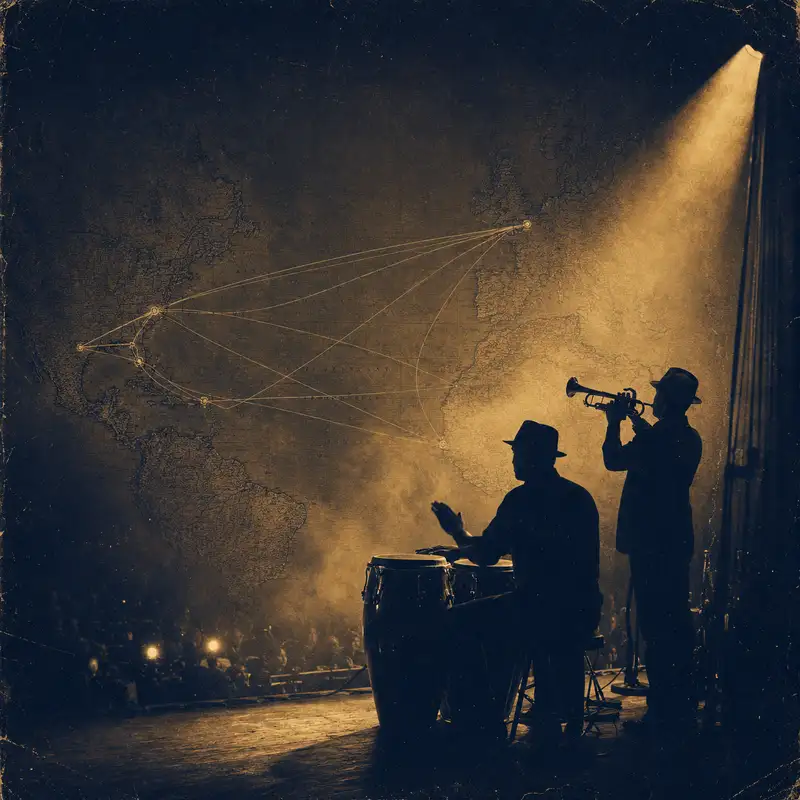
When Jelly Roll Morton talked about the "Spanish tinge" in jazz, he wasn't talking about Spain. He was talking about Cuba, and the West African rhythmic tradition that survived the Middle Passage in Havana the same way it survived in New Orleans.
When Jelly Roll Morton talked about the "Spanish tinge" in jazz, he wasn't talking about Spain. He was talking about Cuba, and the West African rhythmic tradition that survived the Middle Passage in Havana the same way it survived in New Orleans.
This episode traces four lines running outward from the same source: the Afro-Cuban reunion that debuted at Carnegie Hall in 1947 and produced "Manteca"; Django Reinhardt fusing Armstrong's records with Romani tradition in occupied Paris; the bossa nova collision between Rio de Janeiro and New York that gave the world an accidental voice; and Miles Davis hearing all of it in a Spanish guitar concerto and recognizing something he already knew from the blues coming up the river in East St. Louis.
The drain runs in every direction. The river doesn't know what it's carrying.
Groundwater draws from the book Race Records: The Lie That Split American Music — and the Blues That Ran Underneath by Thomas Stubbs.
Music in this episode:
- "Guitar Rag," Sylvester Weaver (OKeh, 1923) — show theme, public domain
- "Cuba: Lucumi Drums," from African and Afro-American Drums (Smithsonian Folkways FE 4502)
- "Manteca," Dizzy Gillespie and His Orchestra featuring Chano Pozo (Victor, 1947)
- "Minor Swing," Quintette du Hot Club de France (Swing, 1937)
- "The Girl from Ipanema" (single version), Stan Getz and João Gilberto featuring Astrud Gilberto (Verve, 1964)
- "Concierto de Aranjuez (Adagio)," Miles Davis, arranged by Gil Evans, from Sketches of Spain (Columbia, 1960)
All clips excerpted for commentary and criticism.